Card Deck Design.
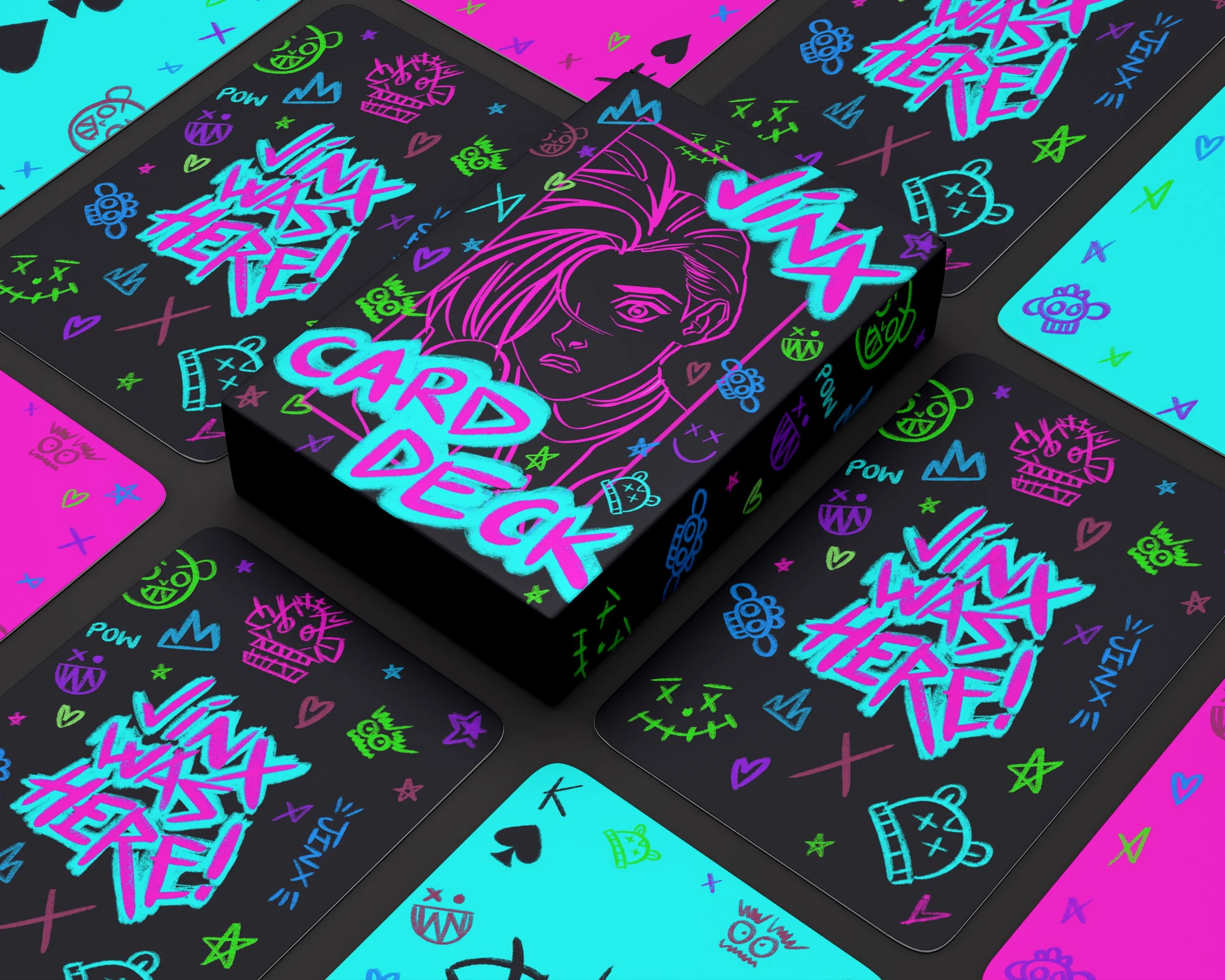
Designing a card deck based on a theme of choice: The character ‘Jinx’ from the show ‘Arcane.’
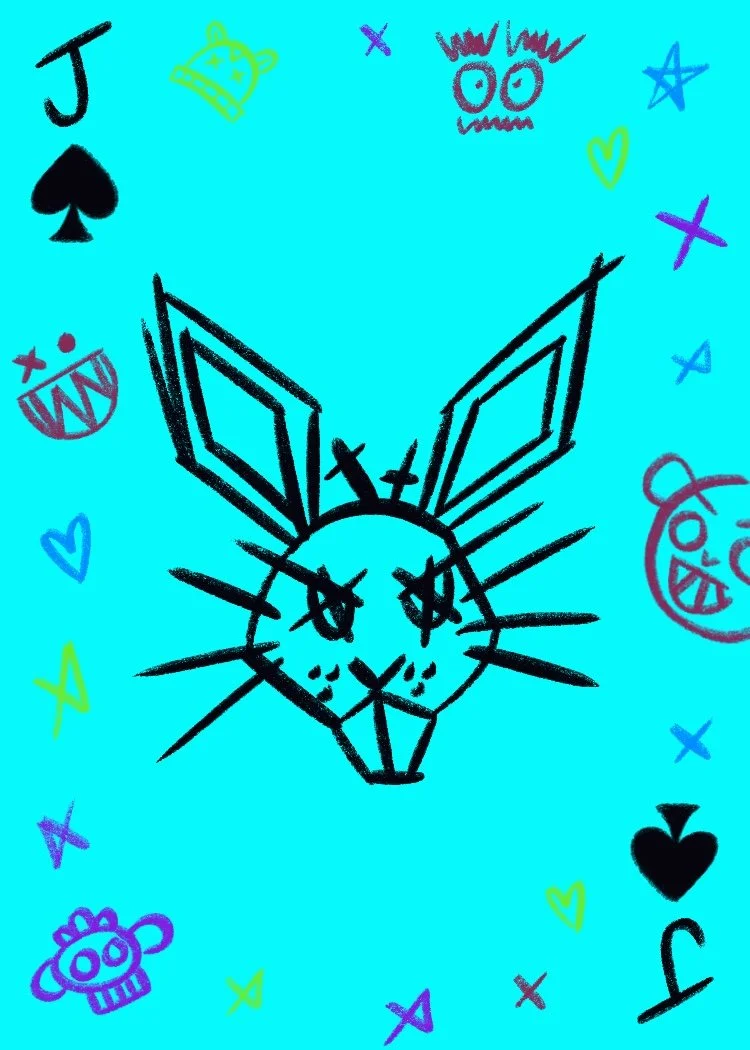
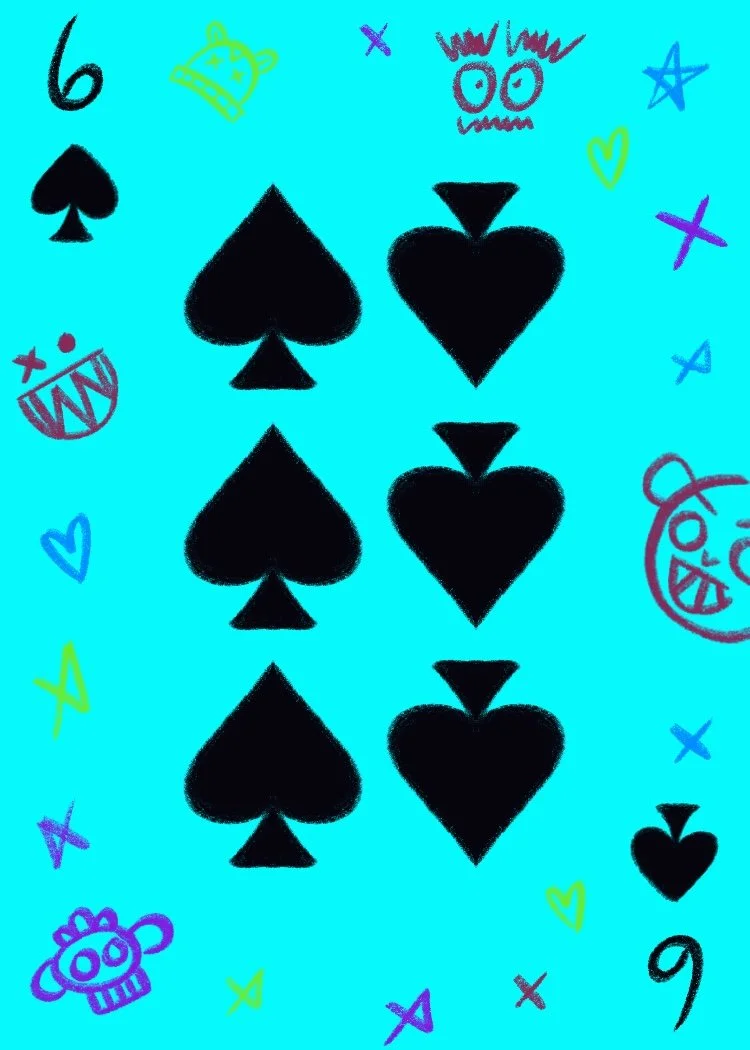
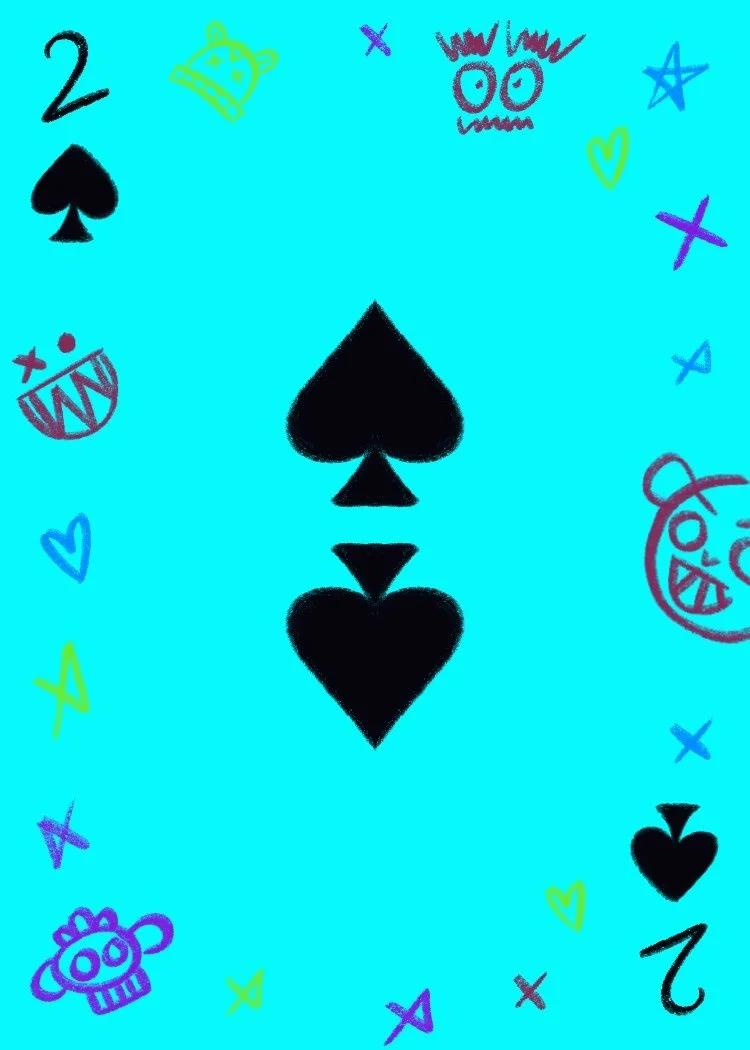
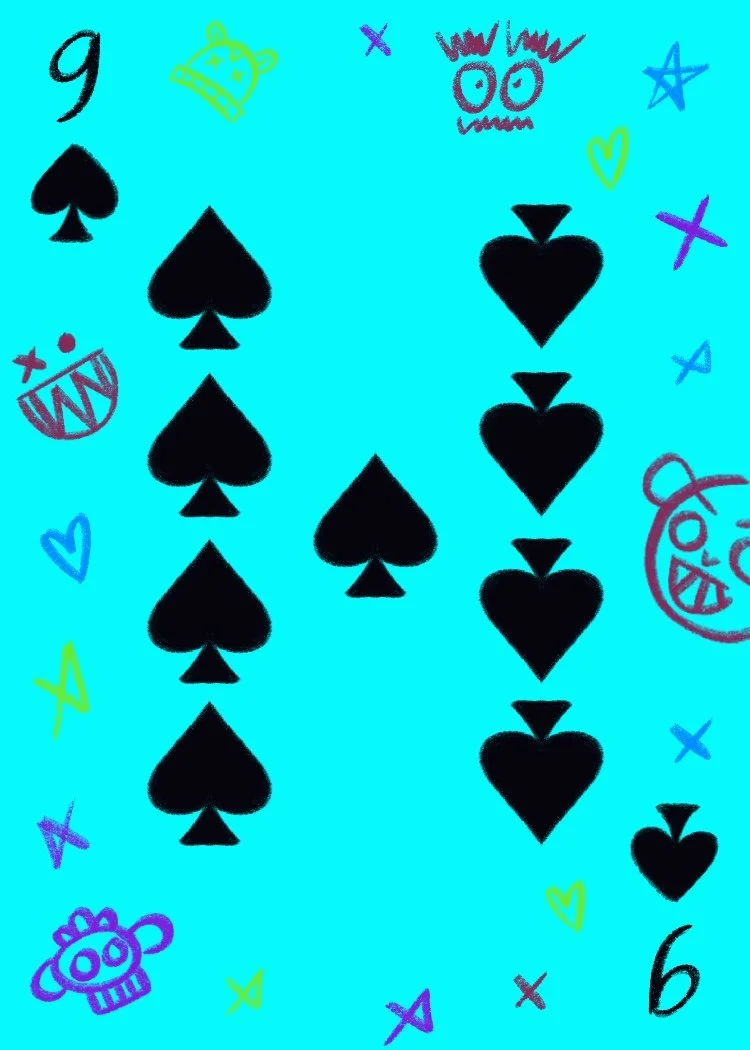
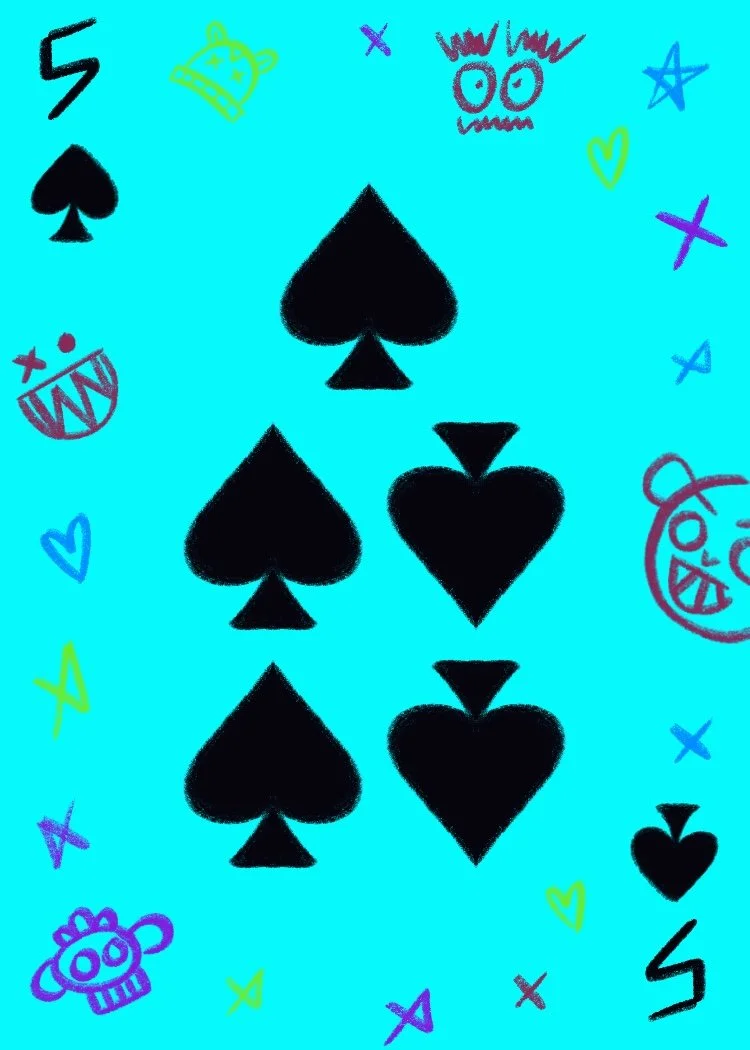
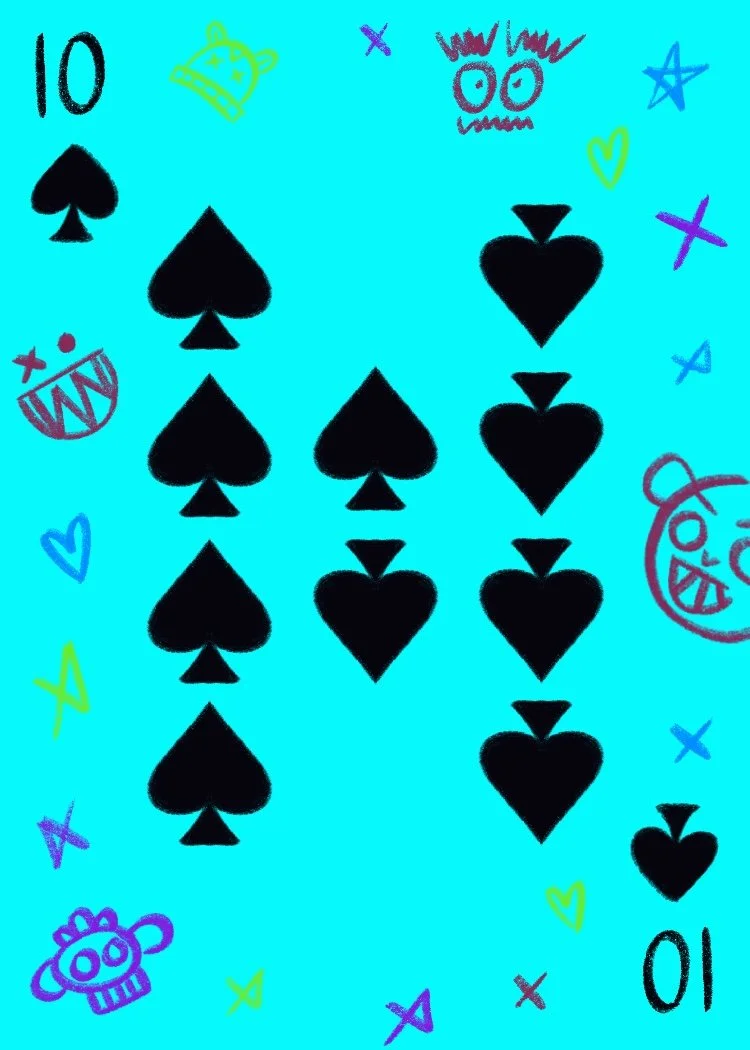
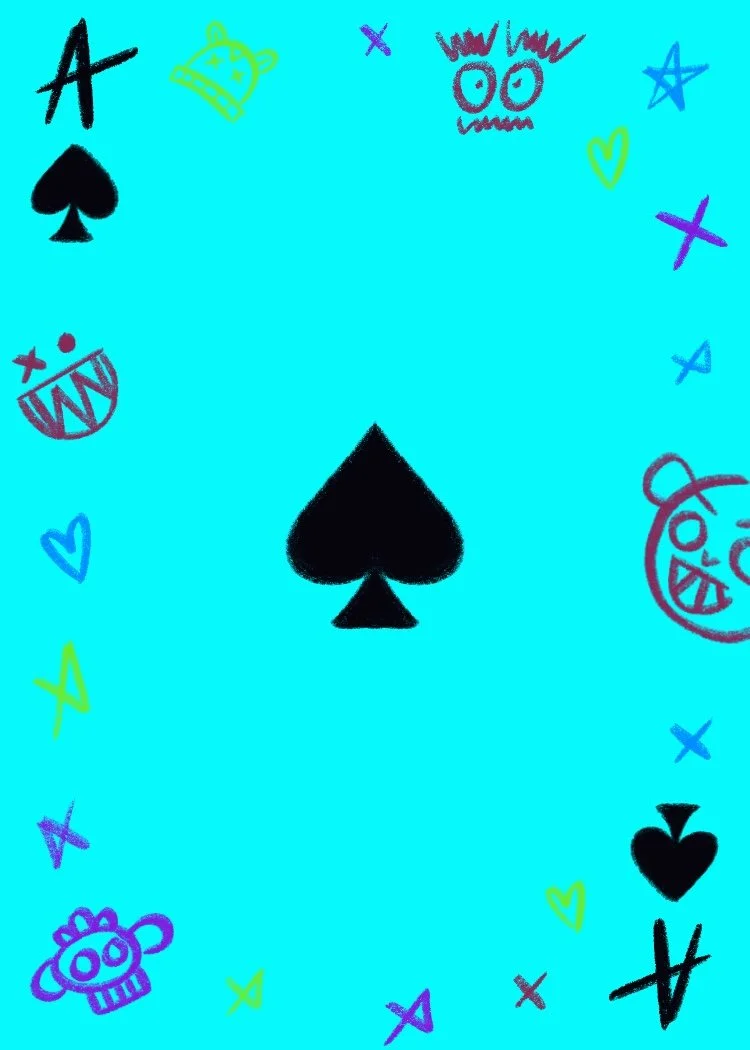
This is a self-directed playing card deck design exploring what it means to build a complete visual design system from scratch: one that has to hold together across 54 cards, 2 jokers, and a full packaging suite. The project brief required designing the face cards (King, Queen, Jack), one complete suit of number cards, all four Ace cards, the Jokers, and a box. Every element had to feel cohesive, intentional, and distinctly unique.
Team
Solo
Role
Concept Development, Illustration, Graphic Design, Packaging Design
Tools
Procreate, Adobe Photoshop, Illustrator
Duration
1 week
Theme Exploration.
Before committing to a direction, I explored three distinct themes to understand what would sustain a full deck's worth of design decisions.
Theme 1: Valorant: A tactical shooter I played competitively for my university SCAD's esports team. The idea was to feature game agents as card characters, pulling from the game's existing design language.
Theme 2: Cybersigilism: My favorite form of abstract art; edgy, delicate, gothic-inspired. The concept was to build the entire deck around abstract sigil-like imagery with no central character.
Theme 3: Jinx from Arcane: Jinx is one of my favorite characters, and her visual world, neon chaos, graffiti energy, anarchic illustration style, felt like it could anchor a full deck. The idea was to feature Jinx as the Joker and high-card character, surrounded by a graffiti-inspired background pattern system.
Chosen Direction.
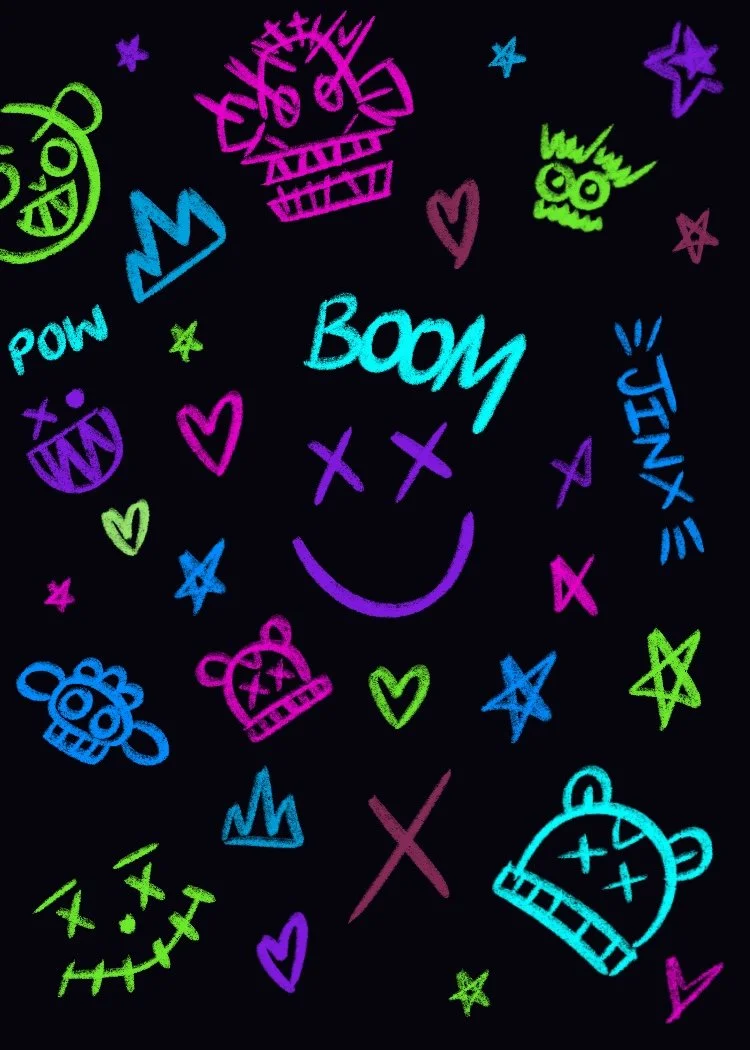
I landed on Jinx but with a twist. Rather than simply adapting existing character art, I wanted to build an original illustration of her and pair it with a custom graffiti background system: a repeating pattern of chaotic doodle marks, monster faces, hearts, stars, and X's that feels handmade and unhinged in the best way. The character is known to make such graffiti art and I wanted to emulate that. This gave me a scalable background I could apply across every card while reserving the detailed illustration work for the high-value cards.
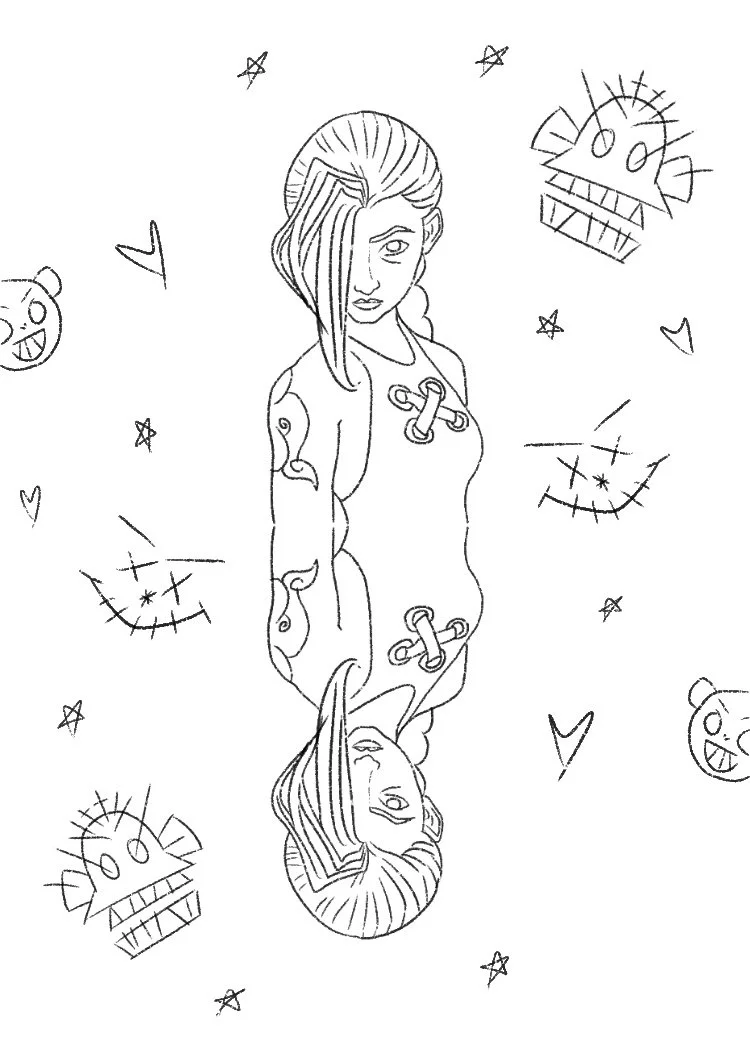
3 Face Cards.
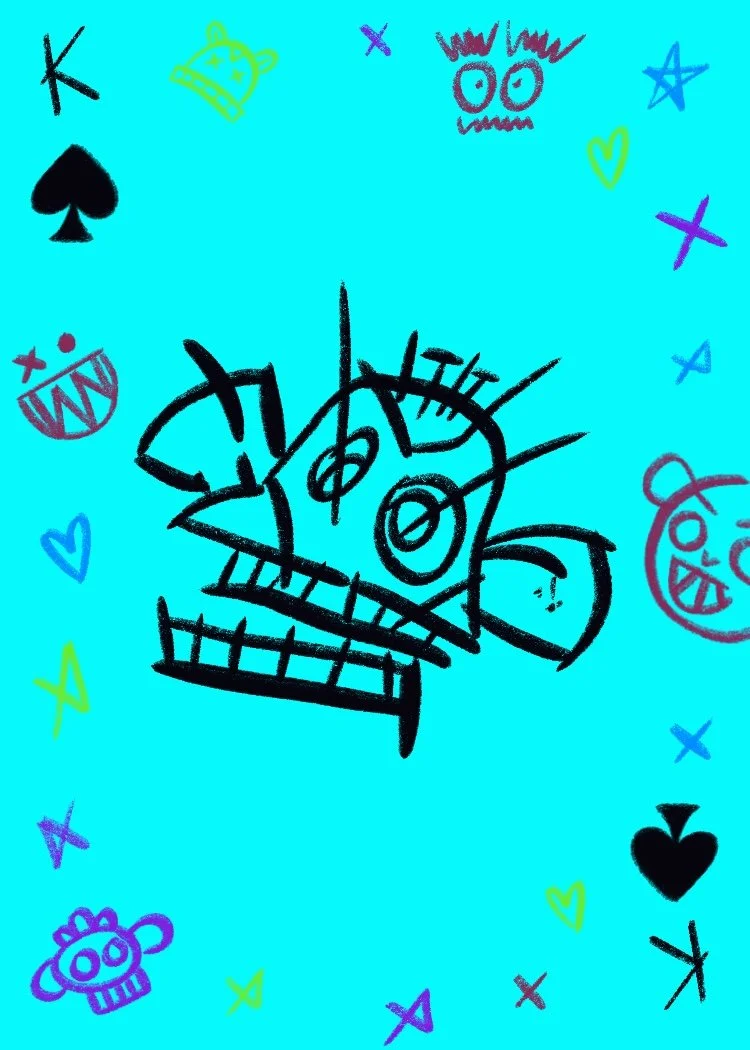
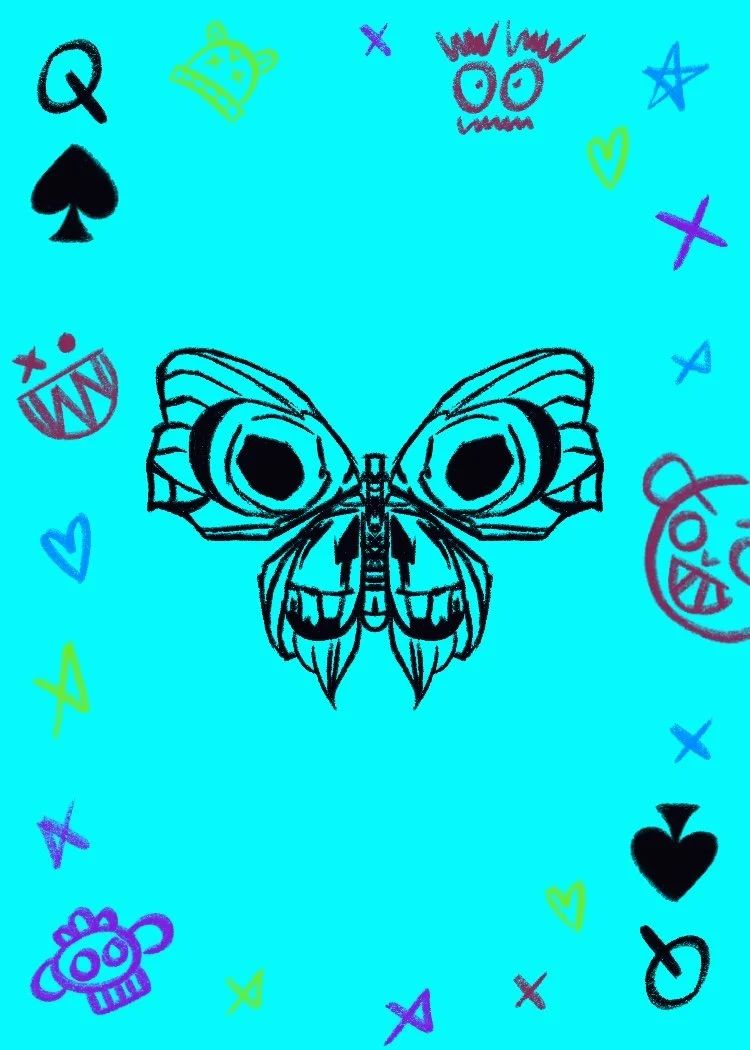
Number Cards.
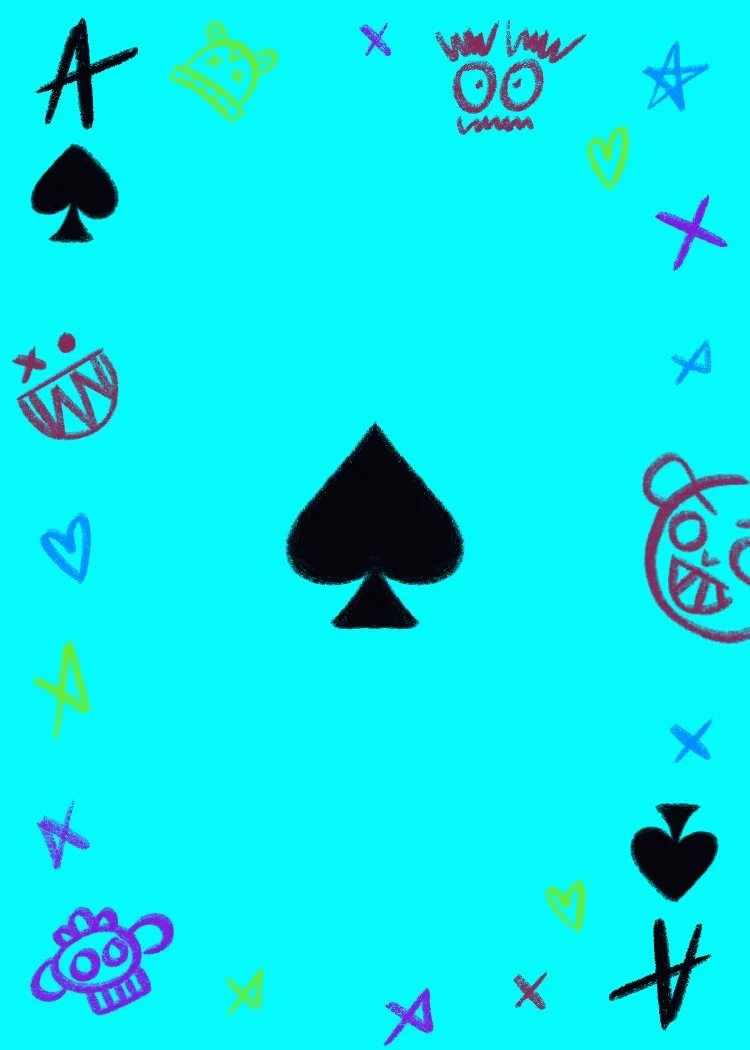
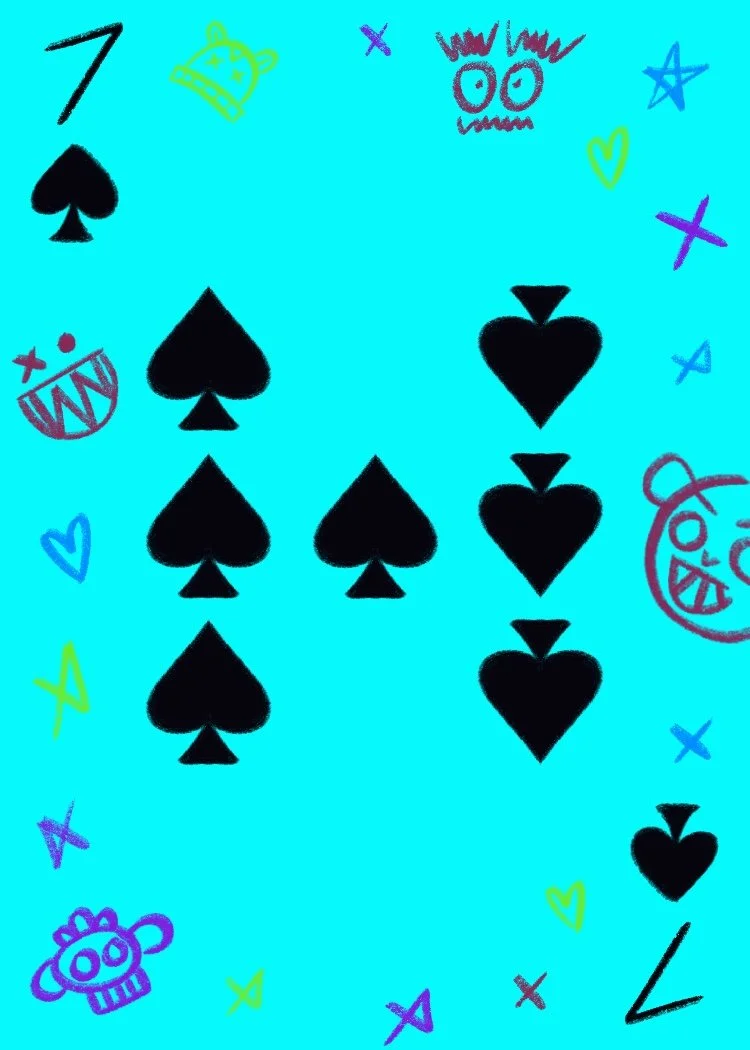
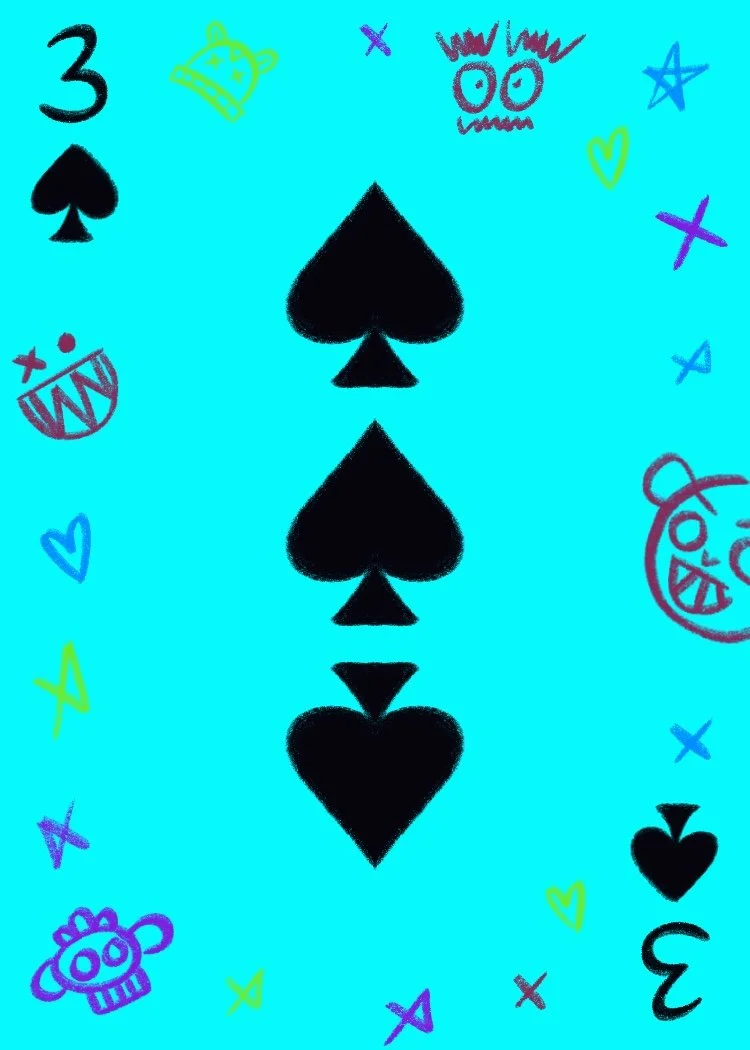
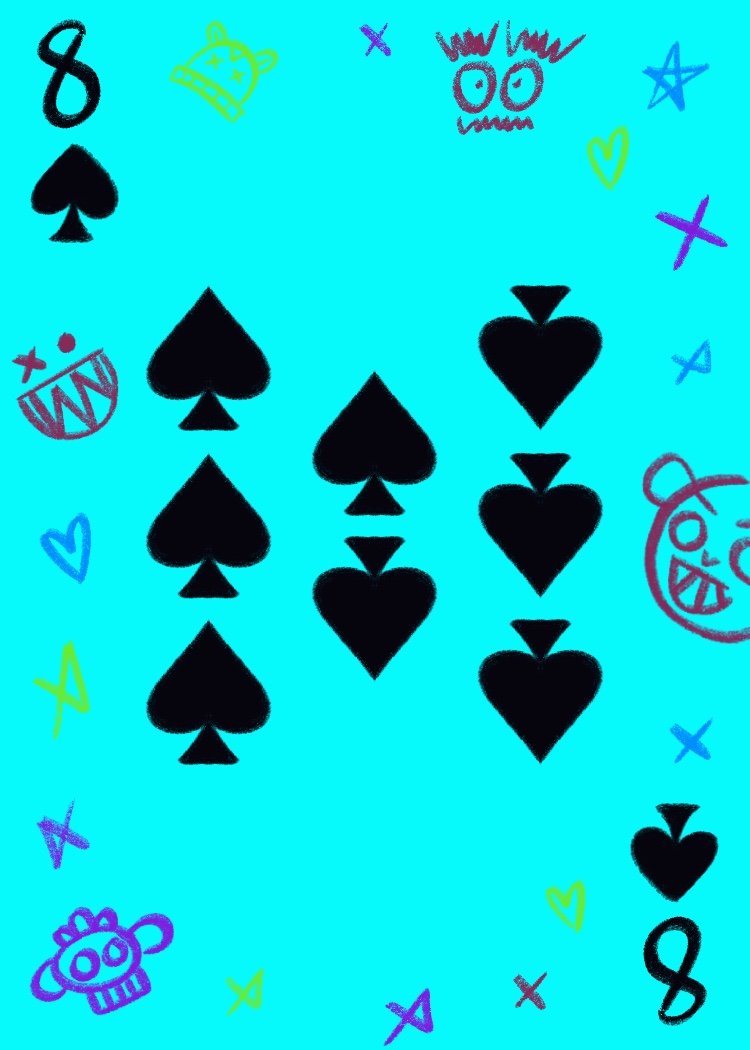
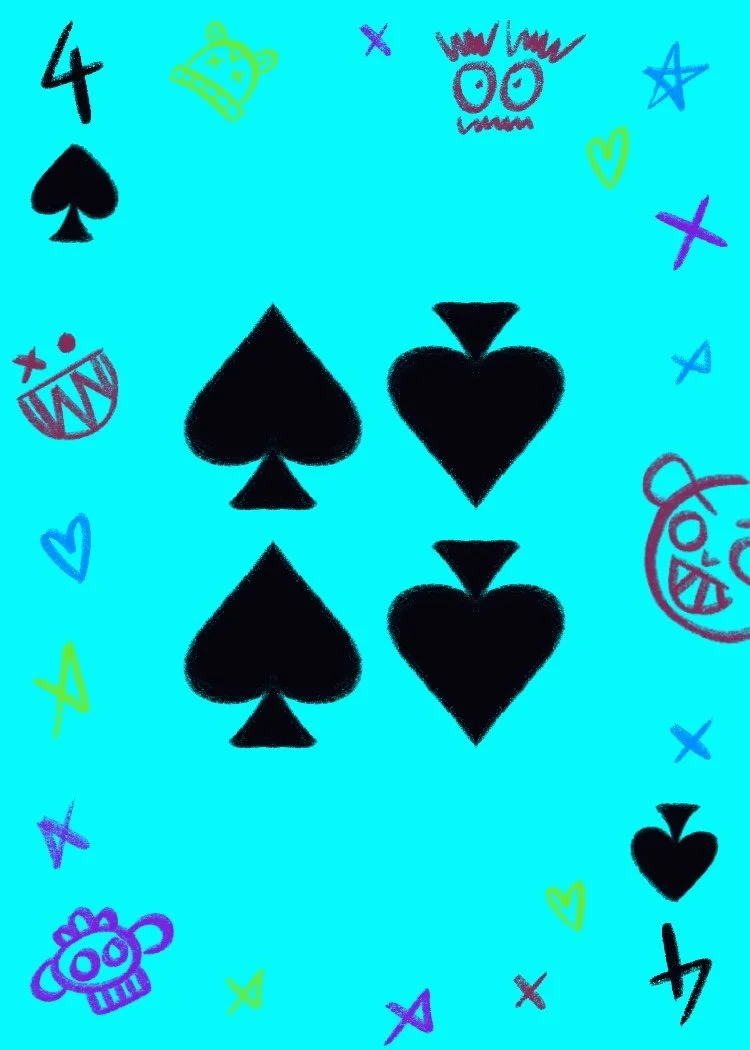
Ace Cards.
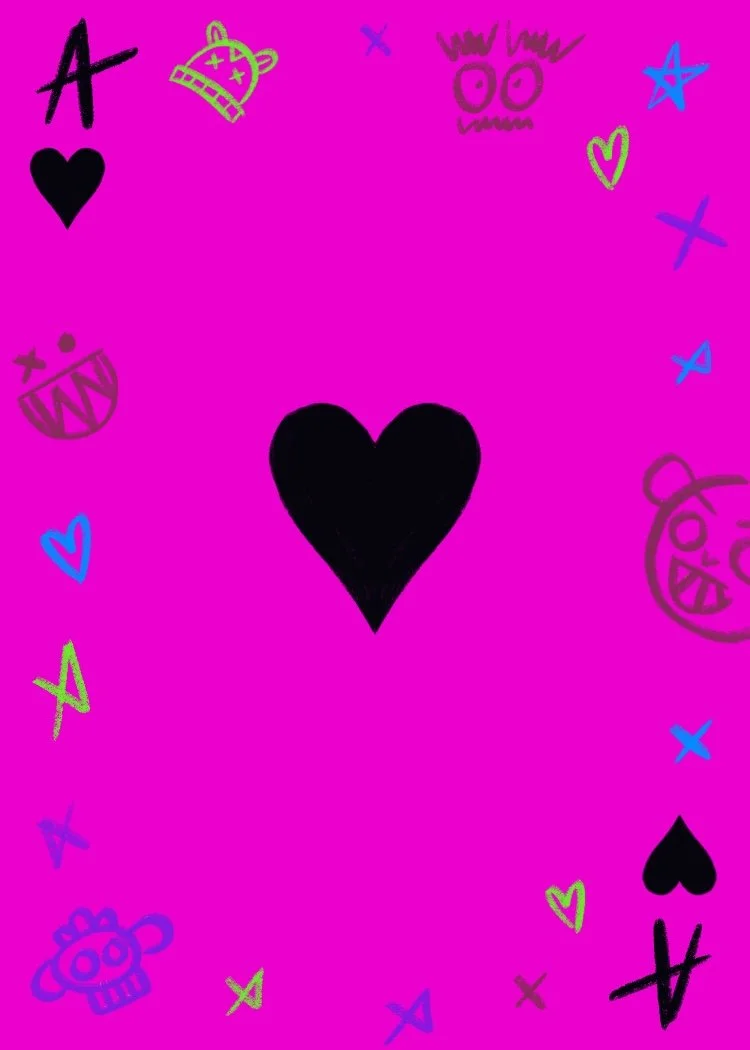
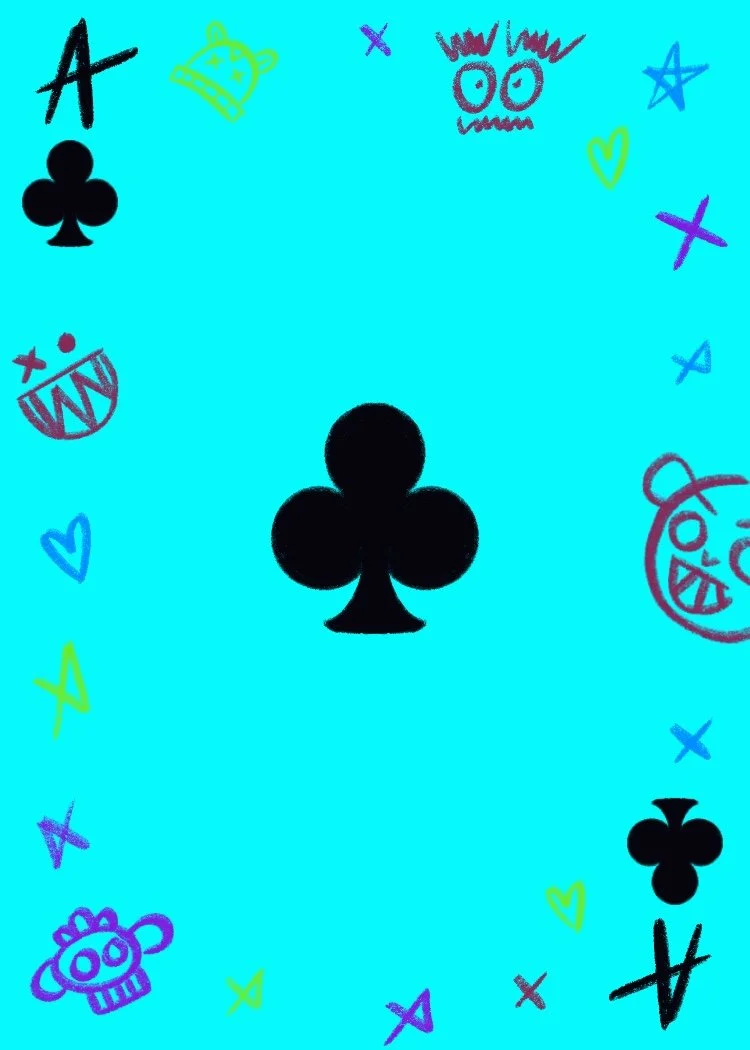
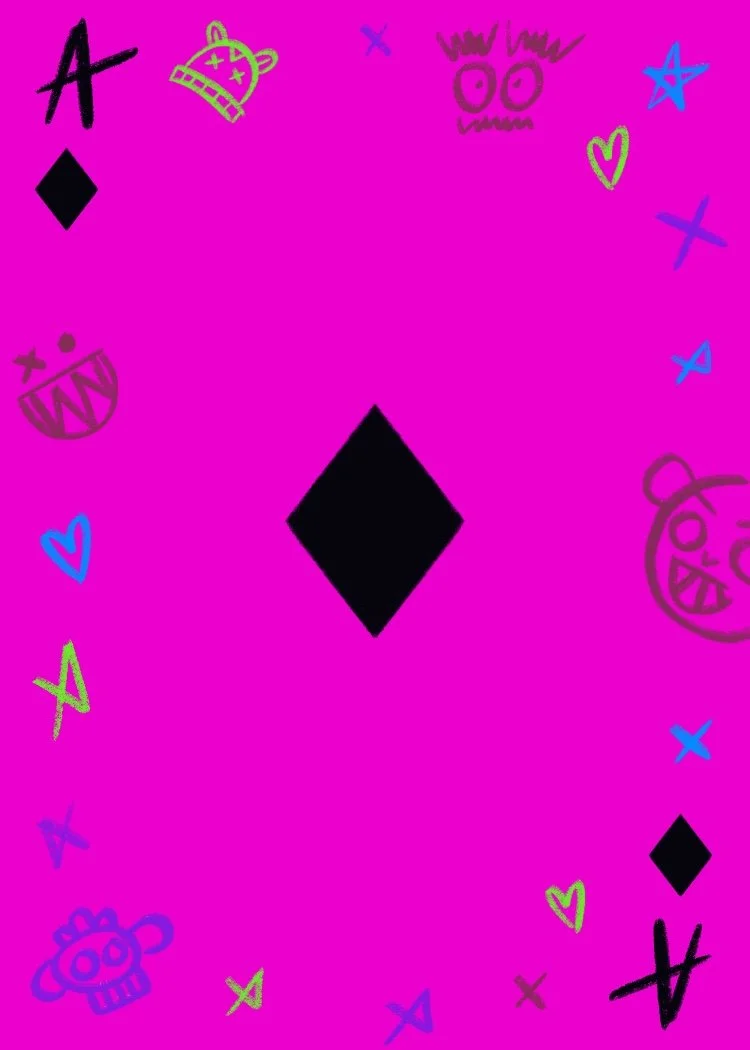
Joker Cards.
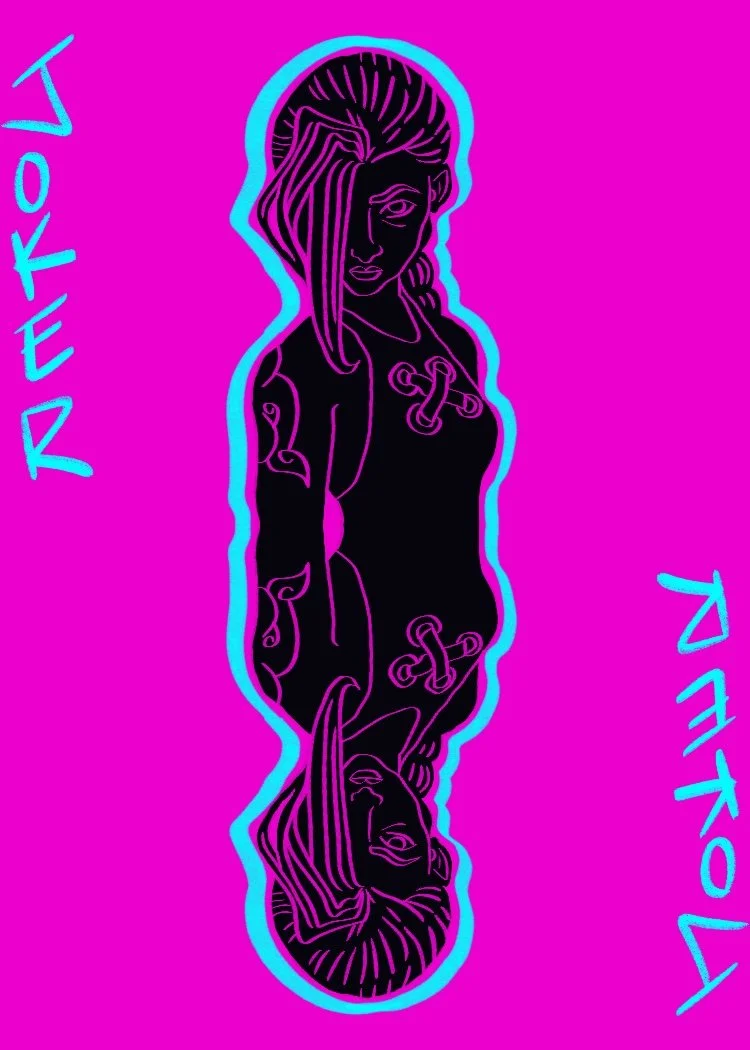
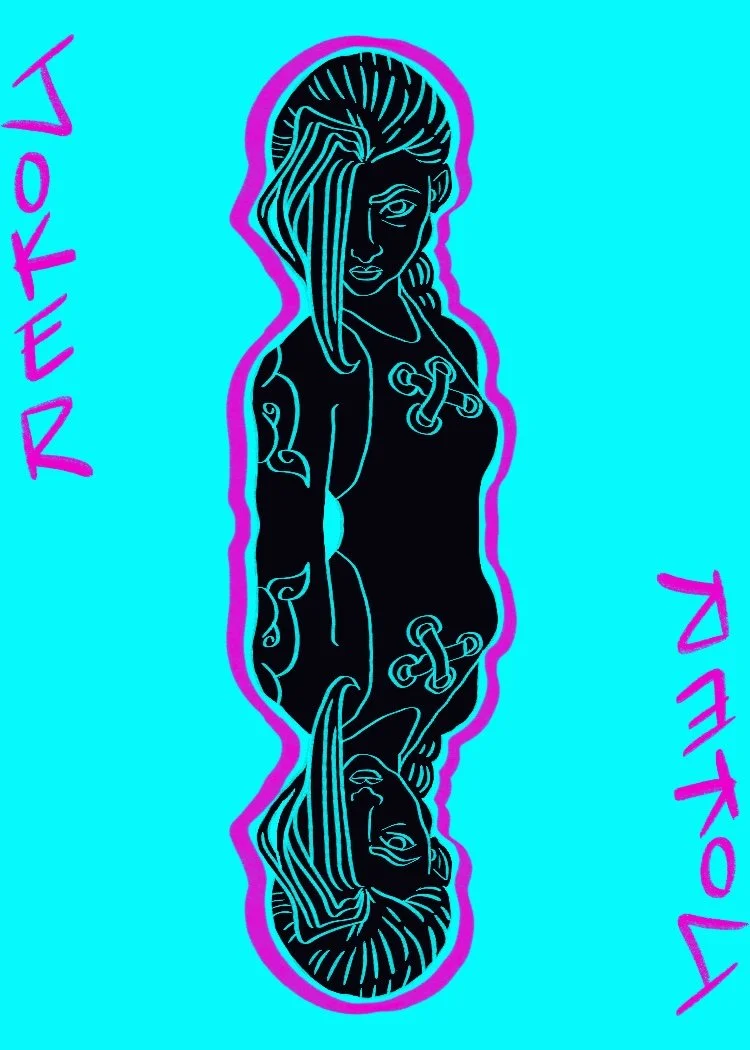
Back of Cards.

Packaging.
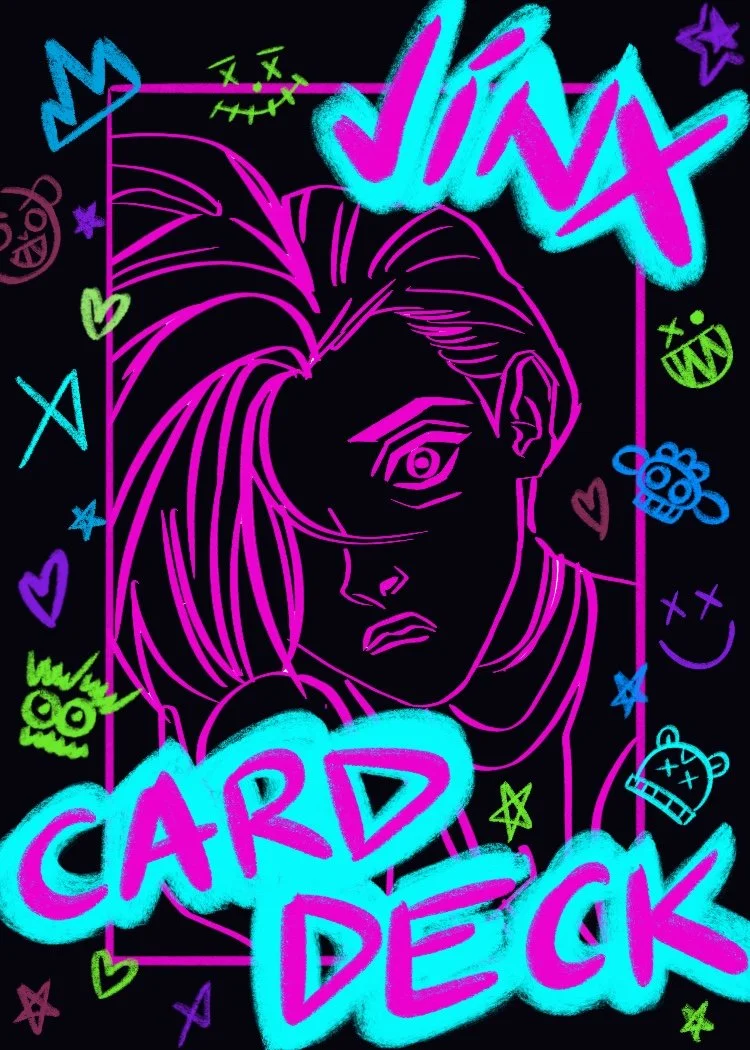
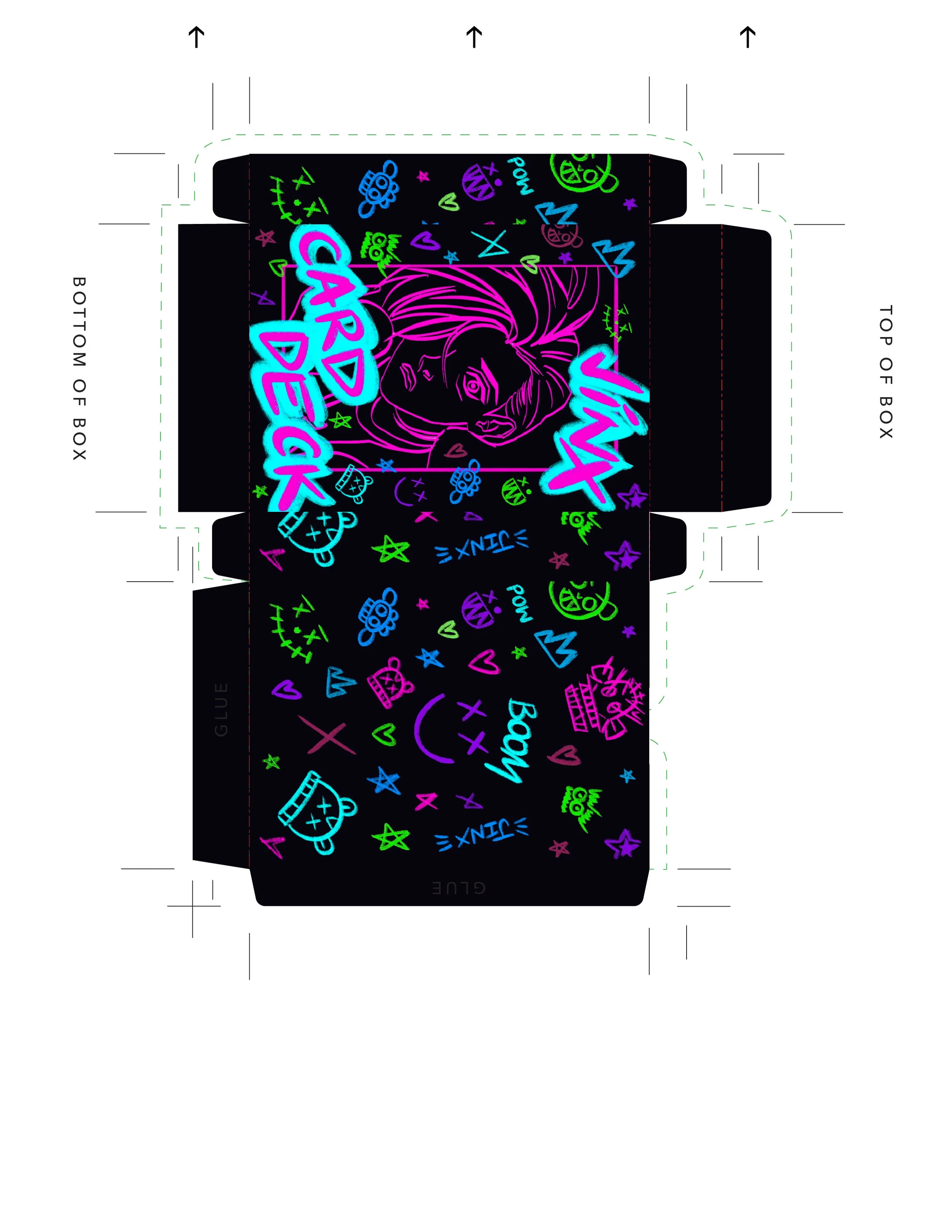
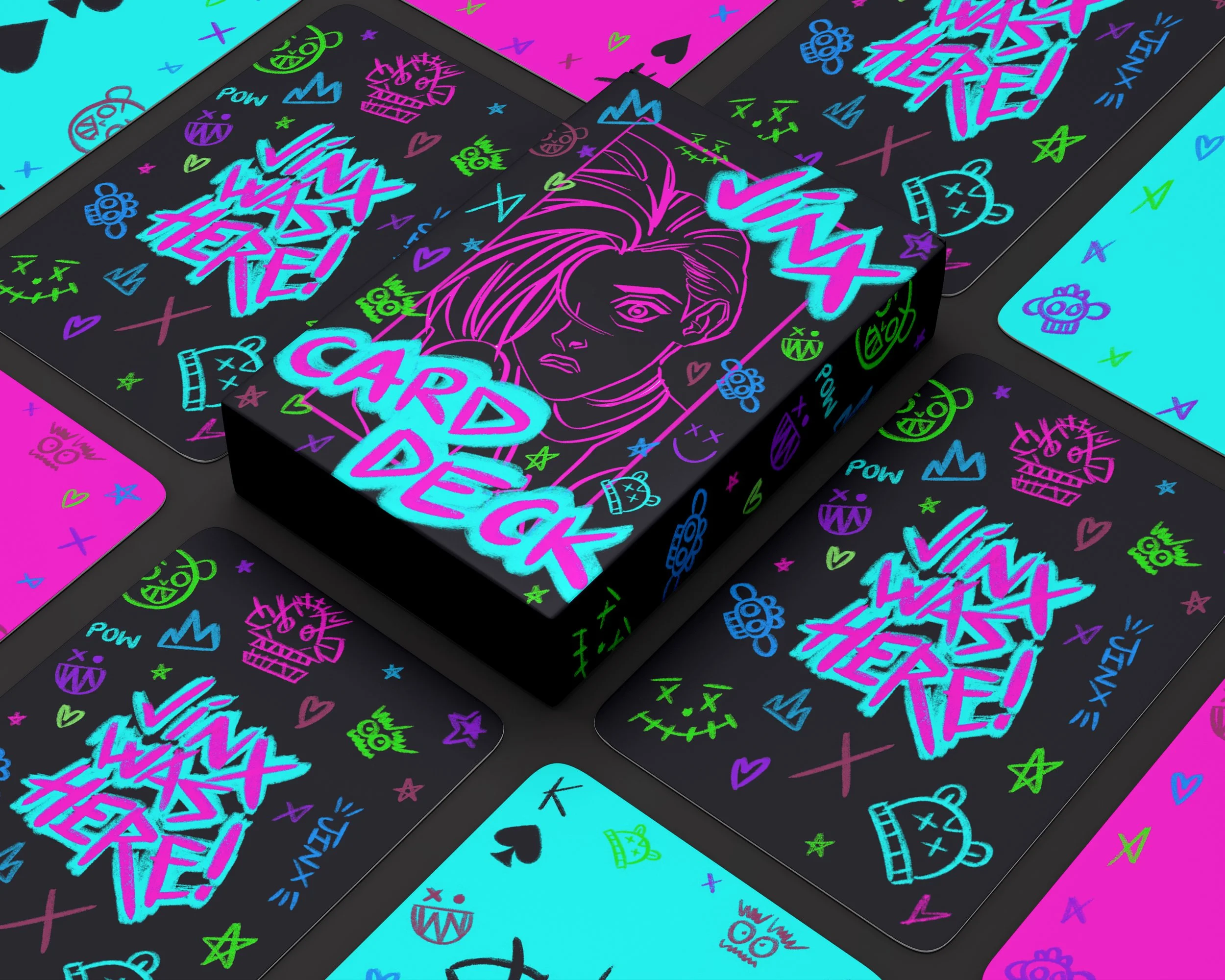
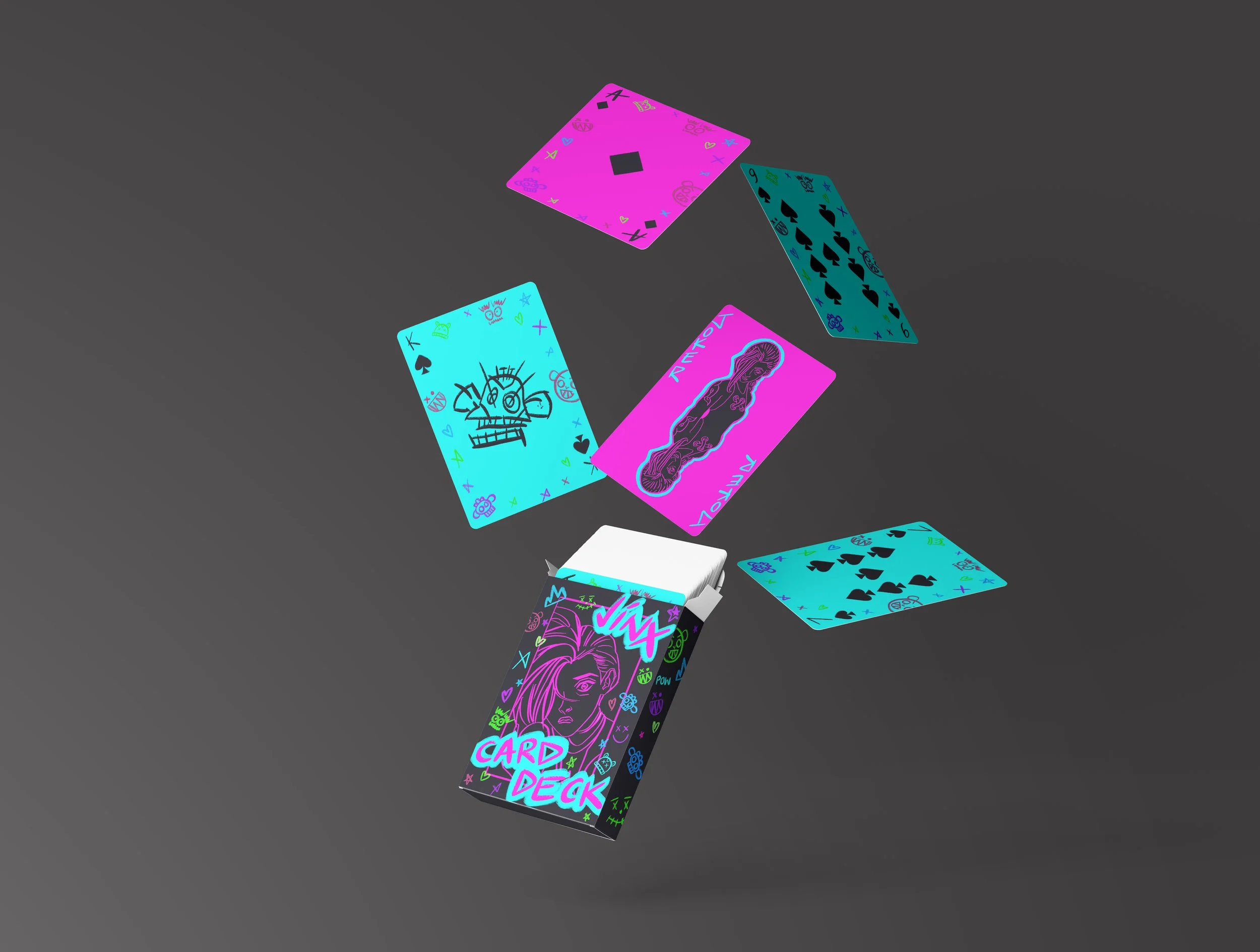
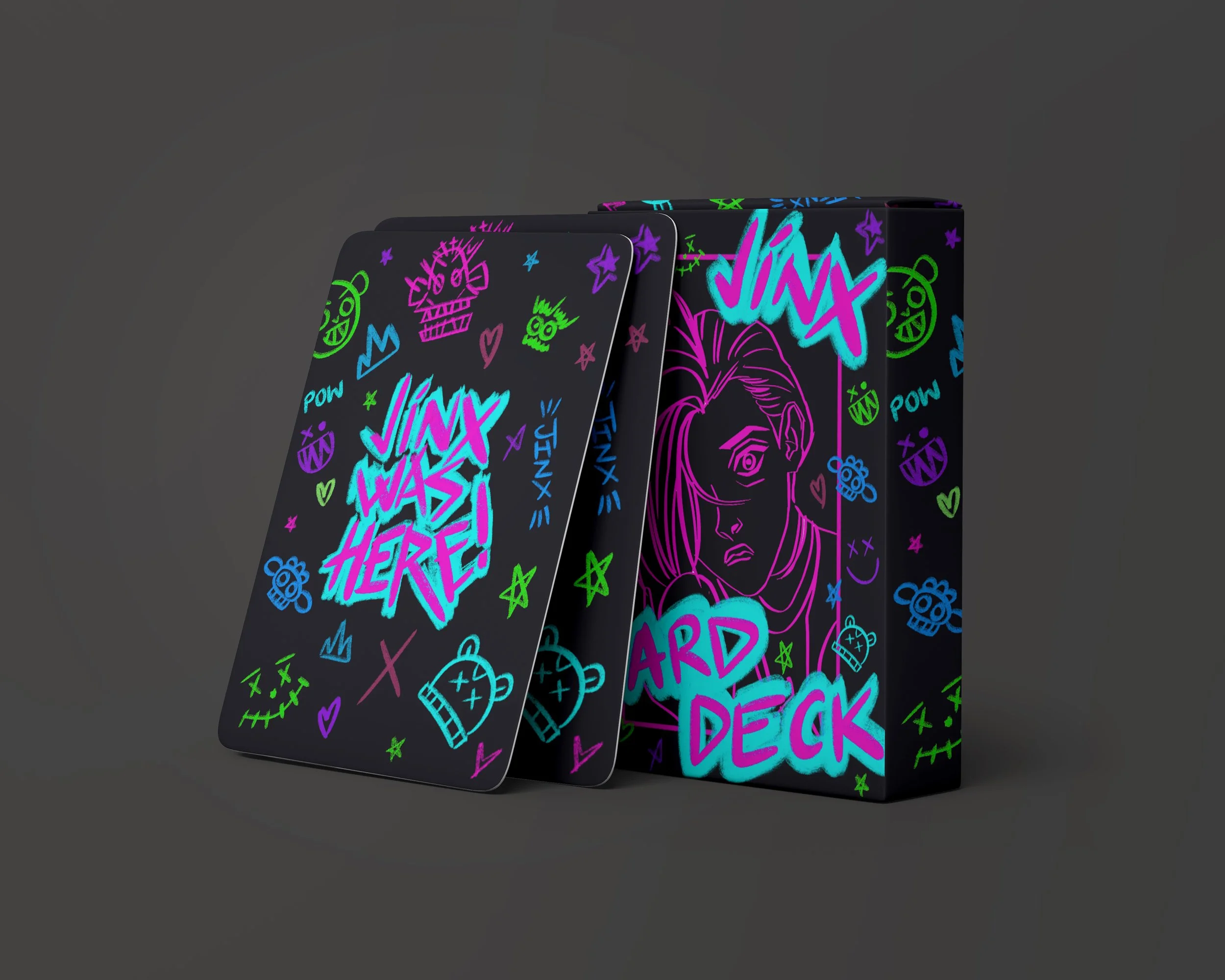
The packaging carries the full visual system to its conclusion. The box uses a black base with the neon cyan/magenta palette for the Jinx illustration and "CARD DECK" type on the front face. The back and sides extend the doodle pattern. A flat dieline was developed alongside the 3D mockup to ensure the design would translate to a printable format.
Conclusion.
This project pushed me to think in systems. Designing one card is an illustration challenge, but designing 54 is a design systems challenge. Every decision about color, pattern density, illustration weight, and typography had to hold up at scale, not just on a single showcase piece. Building the cybersigilism background as a repeatable element library was one of the most technically satisfying parts of the process, and seeing it carry through from a single sketch to a 3D-rendered box made the system feel real in a way that flat mockups don't always achieve. This is one of the first projects where my illustration background and my UX and graphic design skills operated as one thing rather than separate disciplines.